



›
Blog›
Wellness›
Tenerife: More Than a Destination— A New Perspective on Well-Being
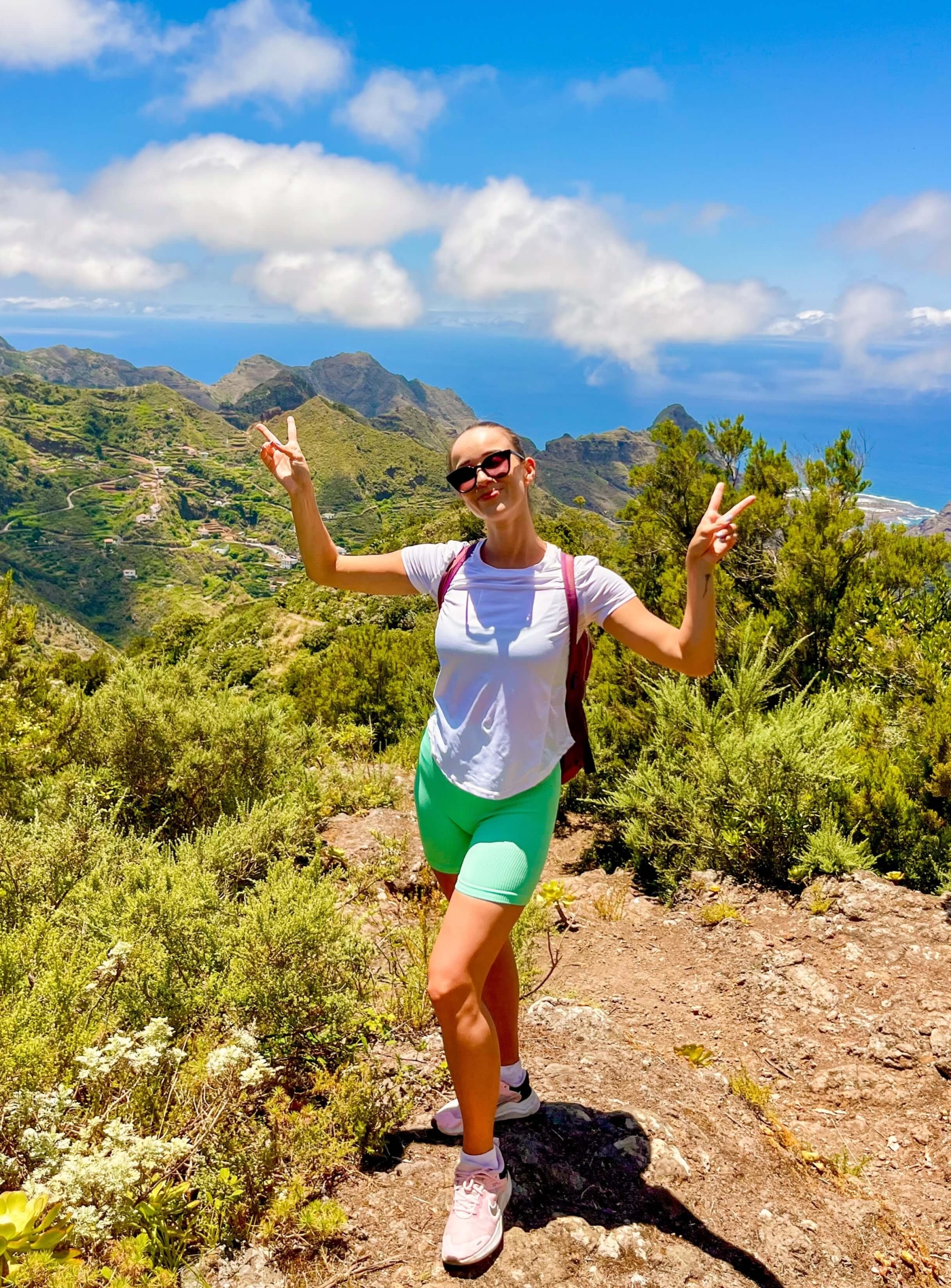
"The most beautiful things we bring home from our travels are often not places, but new perspectives on life."
When I landed in Tenerife in April, I brought more than summer clothes in my suitcase—I brought no expectations. Ahead of me were two months of an Erasmus internship at MBestCare, a wellness company dedicated to promoting long-term well-being through evidence-based and holistic approaches. What I did not know was that I would return home with something even more valuable: a new perspective on well-being.
Like many people, I first associated Tenerife with sunshine, beaches, and relaxation. Only after actually living and working on the island for some time did I begin to understand why many people do not come here only for a holiday but choose to build a life here.
Even before arriving, I knew that our environment has an important influence on our well-being. In Tenerife, however, I felt this for the first time in a much deeper way. Again and again, I met people who shared similar stories—they first came for the sun but stayed for the lifestyle, the closeness to nature, and the greater sense of balance.
That is when I started asking myself:
To what extent can the environment we live in truly influence our body, mind, and quality of life?
When Nature Becomes a Space for Regeneration
What I remember most are not the landmarks, but the feelings.
The hike through the ancient forests of Anaga. My first surfing experience, where between the waves there was no space to think about emails or to-do lists. Evening walks by the ocean, where I simply walked, listened to the waves, and watched the sunset.
Later, I realised that what I experienced was not only a subjective feeling. Research by the World Health Organization (WHO) shows that green and blue spaces play an important role in supporting physical and mental health. Contact with nature is associated with lower stress levels, better mood, and greater life satisfaction.
A systematic review by Twohig-Bennett & Jones (2018), analysing more than 140 studies, found that regular exposure to nature reduces the risk of depression and positively affects psychological well-being. Researchers from Stanford University also discovered that even a walk in nature can reduce rumination—the repetitive cycle of negative thoughts often linked to chronic stress.
Research on so-called blue spaces is equally compelling. A review published by BlueHealth / European Commission Research highlights that proximity to oceans and other bodies of water supports psychological restoration, reduces stress, and strengthens our sense of connection with ourselves.
Today, I no longer see nature as a place to escape to, but as a place for regeneration.
The Lesson of Island Life
If nature taught me to calm my mind, people taught me a different relationship with time.
In Tenerife, I had the feeling that life was not constantly ruled by rushing. People take time for conversation, movement, social connection, or a simple walk by the ocean. Not because they have fewer responsibilities, but because they also allow themselves to rest.
I also started choosing nature over my phone more often after work. These simple changes had the greatest impact.
Harvard Health Publishing explains that chronic stress keeps the body in a constant state of alert, affecting the brain, cardiovascular system, immune function, and mental health over time.
Likewise, the World Health Organization – Burn-out in ICD-11 defines burnout as the result of chronic workplace stress that has not been successfully managed.
So, the biggest lesson Tenerife taught me was not that we must live more slowly.
It was that we must allow ourselves to live more presently.
Wellness as a Way of Life, Not a Luxury
My internship at MBestCare showed me that wellness is not something we occasionally treat ourselves to—it is a way of life.
As presented on the company´s About MBestCare page, their philosophy is built on a holistic approach to well-being, prevention, personalised care, and evidence-based practices. Their goal is not only to create meaningful retreat experiences but also to empower people with habits they can integrate into everyday life. Their wellness programmes are available on the MBestCare Retreats page.
I began to notice this in myself as well. Walks by the ocean, more movement, contact with nature, and better quality rest were no longer exceptions—they became my routine.
Science helps explain why. Harvard Health Publishing describes how the parasympathetic nervous system supports recovery and restoration. Researchers at the Benson-Henry Institute for Mind Body Medicine, part of Massachusetts General Hospital and Harvard Medical School, have shown that the relaxation response, conscious breathing, mindfulness, and regular movement can significantly reduce stress and improve nervous system regulation.
Today, wellness no longer means luxury to me.
It means responsibility for my own health.
What I Am Bringing Home
I am not returning home only with new experiences, but with a different perspective on life.
I realised that well-being does not come from one big change, but from the small decisions we make every day.
I also want to keep the habits I naturally developed here—more time in nature, more movement, more presence, and more space for rest.
The biggest insight I am bringing home is simple:
Self-care is not selfish.
It is responsibility.
Conclusion
I came to Tenerife for professional experience.
But I am leaving with much more than new knowledge.
I am leaving with the understanding that wellness is not a destination, but a way of life. That our well-being is shaped by small daily habits, the environment we live in, and the moments when we allow ourselves to pause.
Perhaps the greatest value of Tenerife is not its sun or ocean.
It is that it reminds us of something we often forget in the fast pace of everyday life—to take a deep breath, slow down, and reconnect with ourselves.
That is the greatest lesson I am bringing home.